Rejection Sensitive Dysphoria at Work: Why Feedback Feels So Personal
Rejection sensitive dysphoria (RSD) is an extreme emotional response to perceived or actual rejection, criticism, or failure. People experiencing RSD describe a sudden, overwhelming emotional crash triggered by what others might consider mild feedback. At work, this can turn a routine performance review into an experience that feels devastatingly personal and physically painful. RSD is not a standalone psychiatric diagnosis in the DSM-5, and Focuse is not a diagnostic tool. It is a focus training platform. Understanding RSD, however, helps explain why some people react so intensely to workplace feedback and what practical strategies can make that feedback feel manageable instead of catastrophic.
What Is Rejection Sensitive Dysphoria?
The term rejection sensitive dysphoria was introduced by Dr. William Dodson, a psychiatrist specializing in ADHD. He observed that many of his patients, particularly those with ADHD, reported an intense and immediate emotional collapse after perceived rejection or criticism. This response was not simply sadness or disappointment. Patients described it using words like "devastating," "physically painful," and "unbearable." The emotional crash arrives suddenly and can persist for hours or even days, far outlasting what the situation seems to warrant.
RSD is not listed as its own condition in the Diagnostic and Statistical Manual of Mental Disorders (DSM-5). Clinicians and researchers, however, use the concept to describe a meaningful emotional regulation pattern, especially in ADHD contexts. Emotional dysregulation, including rejection sensitivity, can be one of the most impairing aspects of ADHD for many adults, sometimes causing more functional difficulty than inattention or hyperactivity alone.
The exact mechanism is not fully understood, but researchers point to differences in how the brain processes emotional stimuli in people prone to RSD. The amygdala, the brain region responsible for threat detection and emotional reactivity, appears to activate more intensely and recover more slowly in response to social rejection cues. This creates a feedback loop: the initial trigger is perceived as a threat, the emotional response is disproportionately strong, and the recovery takes longer than typical.
How RSD Shows Up at Work
The workplace is an environment designed around feedback, evaluation, and social hierarchy. For someone with RSD, nearly every professional interaction carries potential emotional risk. Here are the most common workplace scenarios where RSD becomes disruptive:
Performance Reviews and Direct Feedback
An annual review that includes three strengths and two areas for improvement is standard practice. For someone with RSD, the two improvement areas overshadow everything else. The information is not processed as "mostly good with room to grow." It lands as "you are fundamentally inadequate." This emotional response can trigger physical symptoms: a racing heart, tightness in the chest, a feeling of the floor dropping away. The distress can last hours, making it impossible to focus on actual work afterward. You spend the rest of the day re-running the criticism, analyzing every word, imaging worst-case scenarios about your job security.
Email and Written Communication
Written communication removes tone, facial expression, and body language. Each missing signal is an empty space that RSD fills with negative interpretation. A brief reply like "Let's discuss" becomes "you are in trouble." A delayed response to an important message becomes "they are angry with you." A colleague who does not cc you on a relevant thread becomes "you are being excluded on purpose." The absence of clarifying social cues makes every ambiguous message a potential rejection trigger.
Team Meetings and Group Dynamics
Speaking up in a meeting and having your idea politely redirected or, worse, met with silence, can feel like public humiliation. Watching colleagues collaborate easily while you struggle to articulate your thoughts adds a layer of self-criticism that compounds the rejection response. The natural ebb and flow of team dynamics, where not every contribution gets immediate validation, becomes a minefield of potential rejection events.
Impostor Syndrome Amplification
RSD and impostor syndrome share a destructive relationship. Impostor syndrome makes you believe you are not qualified for your role. RSD makes every piece of evidence that might confirm that belief feel like a direct attack. A typo in a report, a question you could not answer in a meeting, a project that took longer than estimated. Each becomes not just an error but proof that everyone else was right to doubt you and you were wrong to believe you belonged there.
Why Feedback Feels So Personal
To understand why workplace feedback hits so hard for someone with RSD, you need to separate the content of the feedback from the emotional processing system receiving it. Most people process professional criticism through a cognitive filter: "This is about my work, not about me as a person. This is information I can use to improve." Someone with RSD lacks the buffer that this filter provides. The criticism bypasses the cognitive filter entirely and activates the brain's threat response system directly.
Research on social pain by neuroscientists at UCLA found that the brain processes social rejection using some of the same neural pathways it uses for physical pain. This overlap is significant because it means that for someone with RSD, the statement "your report needs revisions" can be experienced with the same neural intensity as physical injury. The brain is not distinguishing between social threat and physical threat. It is simply activating the alarm system.
A second factor is anticipatory anxiety. People with RSD do not just react to rejection that happens. They spend significant mental energy anticipating rejection that might happen. This anticipation creates a state of chronic hypervigilance at work. You rehearse conversations before they happen. You overanalyze every interaction after it ends. This constant scanning for potential rejection drains cognitive resources that could otherwise go toward actual work, creating a cruel cycle: the fear of underperforming leads to actual underperformance, which then confirms the fear.
Distinguishing RSD From High Sensitivity
Not everyone who dislikes criticism has RSD. The distinction matters because self-diagnosis without clinical context can lead to both over-pathologizing normal emotional responses and missing other conditions that need treatment.
| Factor | Typical Sensitivity | Rejection Sensitive Dysphoria |
|---|---|---|
| Onset | Gradual emotional discomfort | Sudden, overwhelming emotional crash |
| Physical sensation | Mild unease or disappointment | Described as physically painful or like being struck |
| Duration | Minutes to hours, proportional to trigger | Hours to days, disproportionate to trigger |
| Anticipatory anxiety | Occasional worry before high-stakes situations | Persistent scanning for rejection in routine interactions |
| Behavioral impact | Mild avoidance of known triggers | Significant avoidance; may refuse to ask for help or feedback |
| Recovery pattern | Linear decrease in distress over time | Ruminative cycling where distress re-intensifies |
| Common co-occurrence | None specific | Frequently reported with ADHD; also observed with social anxiety |
If you recognize yourself in the RSD column, it does not mean you have ADHD or any other condition. It means your emotional processing system responds to social evaluation with unusual intensity. That recognition is useful because it points toward strategies that can help.
Practical Strategies for Managing RSD at Work
These strategies do not treat RSD. They are practical tools for reducing the frequency and impact of RSD episodes in workplace settings. None of them replace professional mental health support if your symptoms are significantly impairing your life.
Separate Feedback Intake From Processing
The RSD emotional response is immediate. You cannot stop it. What you can do is separate the moment you receive feedback from the moment you process it. When you are given feedback, verbal or written, your only job in that moment is to receive it neutrally. Thank the person. Say you will review it and follow up. Do not defend, explain, or argue. Wait at least two hours before you read it again or formulate a response. The emotional storm will have passed by then, and you will be able to evaluate the actual content of the feedback rather than your emotional reaction to it.
Build a Pre-Feedback Routine
If you know feedback is coming, a performance review, a project debrief, a meeting where you are presenting work, prepare your nervous system before you enter the situation. A short attention-focusing exercise can help. A 2-minute focus benchmark before a high-stakes meeting shifts your brain from anticipatory anxiety into task-oriented attention. You enter the situation with your cognitive resources online rather than consumed by threat anticipation.
Use Written Templates for Emotional Email
Create a simple rule: if an email triggers an RSD response, you are not allowed to reply for at least four hours. Write a draft if you need to get the emotion out, but do not send it. When you return, use a neutral template. Something like: "Thanks for flagging this. Let me review and get back to you by [time]." Templates remove the emotional processing burden from communication and protect you from sending reactions you will later regret.
Name the Pattern for Trusted Colleagues
You do not need to disclose a medical condition to communicate how feedback lands best. With a trusted manager or close colleague, you can say something like: "I process feedback best when I have time to reflect before discussing it. Would it work to send written notes ahead of our conversations?" Most reasonable people will accommodate this. The goal is not special treatment. It is structuring communication in a way that lets you actually absorb and use the feedback instead of being derailed by the emotional response to it.
Track Objective Performance Data
RSD makes subjective evaluation feel personal because it is personal. It involves someone's opinion of your work. Objective performance data provides a counterweight. If you can look at concrete metrics, output delivered, deadlines met, problems solved, you have evidence that exists independently of anyone's opinion. This does not make the emotional response disappear, but it gives you a factual anchor to return to once the initial intensity fades.
For focus and attention specifically, objective measurement is valuable. Instead of asking yourself "am I focused enough?" or "did I waste today?", you can check actual data. A daily Focus Score tells you exactly how your attention performed today compared to your own baseline. The data is neutral. There is no opinion in it. That is useful when subjective evaluation feels threatening.
How Focus Training Complements RSD Management
Focus training does not treat rejection sensitive dysphoria. No app treats a neurobiological emotional response pattern. What focus training can do, however, is address several factors that make RSD worse in workplace settings.
First, attentional control and emotional regulation share cognitive resources. When your attention is depleted, which happens throughout a demanding workday, your capacity to regulate emotional responses decreases. This is why a minor criticism at 4 PM can feel dramatically worse than the same criticism at 9 AM. Regular focus training builds attentional stamina. The more cognitive resources you have available, the more you can bring to bear on emotional regulation when it is needed.
Second, focus training creates a daily ritual that provides structure. Structure is the natural enemy of anticipatory anxiety, which feeds on unstructured mental space. A consistent 5-minute daily practice, as described in our guide on the 5-minute focus habit, occupies attention in a way that interrupts the rumination cycle. You cannot ruminate on rejection while you are actively directing your attention toward a demanding cognitive task.
Third, focus training produces objective data about your cognitive performance. One of the most destabilizing aspects of RSD is the gap between how you feel you performed and how you actually performed. A day where you felt scattered and inadequate might produce a perfectly average Focus Score. A day where you felt sharp might score lower than usual. Objective data gently contradicts the catastrophizing narrative that RSD generates. Over time, this builds a more accurate self-assessment, distinct from the emotional noise that RSD introduces.
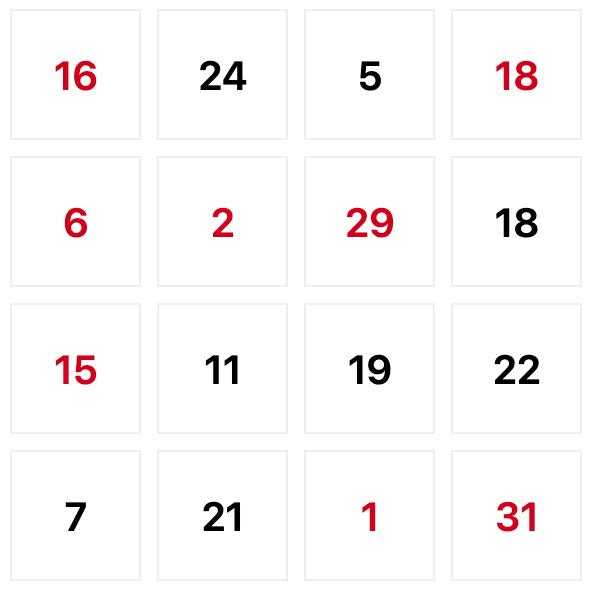
Fourth, many people with RSD report that their attention drifts toward rejection-related thoughts involuntarily. A task that requires sustained, directed attention, as a Schulte table based game does, trains the skill of returning attention to a target after it wanders. This is directly relevant to managing RSD-related rumination. The same mental motion of noticing your mind has drifted and bringing it back to the task applies whether the distraction is a notification or a spiraling thought about a critical email.
For a broader perspective on how focus measurement differs from clinical diagnosis, see our comparison of ADHD tests and focus benchmarks. If you are interested in how cognitive potential and attentional performance relate, our article on IQ versus Focus Score explores why raw cognitive ability means little without the attention to direct it.
When to Seek Professional Support
Workplace strategies and focus training are useful, but they have limits. RSD becomes a clinical concern when it causes significant impairment across multiple life areas. If you recognize any of the following patterns, professional evaluation is appropriate:
- Feedback reactions so intense they prevent you from requesting or receiving necessary performance information
- Avoidance of career advancement opportunities because the application process carries rejection risk
- Relationship strain with colleagues, managers, or partners directly caused by RSD-driven emotional reactions
- RSD episodes that trigger depressive episodes, panic attacks, or significant sleep disruption
- Persistent belief that you are fundamentally defective or unworthy, reinforced by every perceived criticism
A licensed psychologist or psychiatrist can assess whether RSD symptoms are part of a broader diagnosis such as ADHD, anxiety disorder, or mood disorder and recommend appropriate treatment. Some individuals find that a combination of professional clinical support and daily self-monitoring tools improves their ability to navigate workplace feedback. None of these clinical treatments are provided by Focuse or any focus training app.
Medical Disclaimer
Focuse is a focus training and measuring tool, not a medical diagnostic instrument. It does not directly diagnose ADHD or any medical condition. Results are provided for informational and educational purposes only. Consult a healthcare professional for medical advice.
Key Takeaways
- Rejection sensitive dysphoria is an extreme emotional response to perceived rejection, criticism, or failure, commonly but not exclusively associated with ADHD
- RSD is not a standalone DSM-5 diagnosis; it is a recognized clinical phenomenon
- At work, RSD turns routine feedback into an experience that feels physically painful and personally devastating
- Practical strategies include separating intake from processing, using templates for emotional emails, and tracking objective performance data
- Focus training provides attentional stamina, daily structure, and objective data that can reduce RSD's impact without treating it directly
- If RSD symptoms cause significant impairment across multiple life areas, professional evaluation is appropriate
Frequently Asked Questions
What is rejection sensitive dysphoria (RSD)?
Rejection sensitive dysphoria is an extreme emotional response to perceived or actual rejection, criticism, or failure. The term was introduced by Dr. William Dodson to describe a reaction pattern commonly but not exclusively associated with ADHD. People with RSD experience criticism not just as unpleasant but as physically painful, often describing it as a sudden emotional crash or a feeling of being physically struck. It is not listed as a standalone diagnosis in the DSM-5 but is widely recognized in clinical practice.
Is rejection sensitive dysphoria an official diagnosis?
No. Rejection sensitive dysphoria is not a standalone diagnosis in the DSM-5 or ICD-11. It is a clinical concept frequently discussed in the context of ADHD and emotional dysregulation. Some researchers argue it may also occur in other conditions, including social anxiety and borderline personality disorder. If symptoms are severe, a clinical evaluation with a licensed mental health professional is recommended.
How does RSD differ from simply being sensitive to criticism?
The key differences are intensity and duration. Typical sensitivity to criticism involves discomfort that fades within minutes to hours. RSD involves an immediate, overwhelming emotional crash that can feel physically painful and may persist for hours or days. People with RSD often describe anticipating rejection even in neutral situations, altering their behavior to avoid it, and struggling to regulate their emotional response once triggered. The response is disproportionate to the stimulus and significantly interferes with daily functioning.
Can focus training help with RSD at work?
Focus training does not treat RSD directly, but it can help with related workplace challenges. Improving attentional control through daily practice can reduce the cognitive load that makes emotional regulation harder. Measuring focus objectively gives you data-driven feedback that is less personal than subjective performance reviews. Building a consistent daily practice also creates a stabilizing routine that can buffer against emotional volatility. Focus training is a complementary tool, not a replacement for therapy, medication, or clinical support.
Can a focus app like Focuse diagnose ADHD or RSD?
No. Focuse is a focus training and measuring tool, not a medical diagnostic instrument. It does not directly diagnose ADHD or any medical condition. Results are provided for informational and educational purposes only. If workplace feedback reactions are causing significant distress or impairment, consulting a healthcare professional for a proper evaluation is the appropriate next step. A licensed clinician can assess whether symptoms meet diagnostic criteria and recommend appropriate treatment.
Feedback does not have to feel like an attack. Take a free 2-minute Focus Benchmark — objective data, no sign-up, immediate results. Your attention deserves measurement, not judgment.
Last updated June 8, 2026