The 2-Minute Attention Test That Shows Where You Stand
An attention deficit test can help you notice patterns in how your focus operates, but it cannot diagnose ADHD. Only a licensed clinician, using structured interviews, behavioral history, and standardized assessments, can make a medical diagnosis. Focuse measures your daily attentional performance with a 2-minute benchmark, giving you a Focus Score you can track over time. It tells you how well you concentrated today. It does not tell you whether you have a neurodevelopmental disorder. Understanding that distinction is where most conversations about attention testing go wrong.
Why People Look for an "Attention Deficit Test"
People usually look for an “attention deficit test” when focus problems have become hard to ignore. They read the same paragraph four times and still don’t absorb it. They miss a deadline because their brain kept drifting elsewhere. A friend or partner says, half-joking, “Have you ever been tested?” The search begins as a practical attempt to make sense of everyday friction.
What they are really looking for is not a diagnosis. They are looking for an explanation. Something that makes sense of why focus feels harder for them than it seems to for everyone else. Something that gives a name to the daily friction between intention and execution.
This is why attention tests, attention benchmarks, and ADHD screeners are so easy to confuse. The person asking the question wants to understand what is happening in their brain and whether it is normal. A well-designed attention benchmark can answer part of that question with data. The rest requires a professional.
The value of an attention deficit test, in the broad sense most people mean it, is that it turns a vague feeling (“I can’t concentrate”) into something measurable. Once you have a number, even an imperfect one, you have a starting point. You can ask better questions. You can track change. You can stop wondering and start knowing.
What a Clinical ADHD Evaluation Actually Involves
Before we talk about what a 2-minute benchmark can do, it helps to understand what it cannot replace. A clinical ADHD evaluation is a structured, multi-step process conducted by a licensed professional. It is not a questionnaire you fill out on a website. It is not a reaction-time game. It is not something a single score can summarize.
According to the DSM-5 criteria published by the American Psychiatric Association, an ADHD diagnosis requires symptoms present in at least two settings (such as work and home), clear evidence of functional impairment, and symptom duration of six months or more. The evaluating clinician uses structured diagnostic interviews, behavioral rating scales completed by the patient and often by family members or colleagues, developmental history, and sometimes computerized continuous performance tests such as the TOVA or Conners CPT.
A full evaluation typically runs one to three hours across multiple appointments. It costs anywhere from $300 to over $2,000 without insurance. It requires a psychiatrist, psychologist, or physician licensed to diagnose in your jurisdiction. No app, no matter how well-designed, can replicate this process. And no app should claim otherwise.
This is not a limitation of technology. It is a matter of category. An attention deficit test designed for self-administration produces a data point. A clinical evaluation produces a diagnosis. These are different products with different purposes, and confusing them does harm in both directions: people who need clinical help may be falsely reassured by a normal benchmark score, while people who simply had a bad night of sleep may panic over a low one.
For a deeper breakdown of how these two tools compare, see our post on ADHD tests versus focus benchmarks, which covers cost, time, accuracy, and when to use each.
How a 2-Minute Attention Benchmark Works
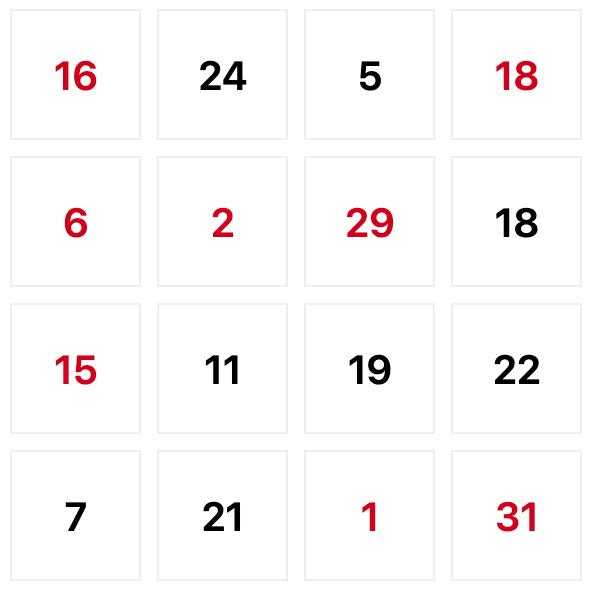
Focuse uses a Schulte Table, a grid of numbers arranged in random order. Your task is simple: find and click each number in sequence, from 1 to the maximum, as fast as you can. The grid grows as you progress. Distractions appear. Time pressure increases. The task is mechanically simple but cognitively demanding. It requires sustained attention, visual scanning speed, processing under distraction, and consistency across the session.
The benchmark measures three dimensions of attentional performance:
- Reaction speed: how quickly your brain locates and processes each successive target. Faster reaction times generally indicate higher attentional readiness, though speed alone tells only part of the story.
- Accuracy under distraction: how well you maintain correct sequential clicking when competing stimuli appear. This is where many people with focus problems see the clearest signal. Clean grids are easy. Grids with noise reveal how robust your attention filter actually is.
- Consistency: how stable your performance remains from the first target to the last. A sharp drop-off in the second half of a session suggests mental fatigue. A flat line suggests sustained control.
These three dimensions combine into a single Focus Score, normalized so you can compare sessions across days. The entire process takes about two minutes. It produces immediate results and stores your history so you can see trends over weeks and months.
The Schulte Table is not new. It was developed by German psychiatrist Walter Schulte in the 1960s as a tool for studying attention and perceptual speed. It has been used in cognitive psychology research, pilot training programs, and speed-reading curricula for decades. What Focuse adds is automated scoring, distraction mechanics, and longitudinal tracking. The underlying task is research-grounded. The delivery is modern.
What Your Focus Score Tells You (and What It Doesn’t)
Your Focus Score is a snapshot of attentional performance on a specific task at a specific moment. Think of it like a heart rate reading. A single elevated reading does not mean you have a heart condition. It might mean you just climbed stairs. It might mean you are stressed. It might mean you drank too much coffee. But a hundred readings over a hundred days, showing a consistent pattern, tell a much richer story.
A Focus Score in the upper range suggests that, right now, your attentional systems are operating efficiently. You located targets quickly, resisted distraction, and maintained steady performance. A score in the lower range suggests something was interfering. It does not tell you what. It only tells you that your attention, at this moment, was below your potential.
Medical Disclaimer
Focuse is a focus training and measuring tool, not a medical diagnostic instrument. It does not directly diagnose ADHD or any medical condition. Results are provided for informational and educational purposes only. Consult a healthcare professional for medical advice.
This disclaimer is not legal boilerplate. It is the single most important framing statement in this entire article. The value of an attention deficit test, in the consumer sense, depends entirely on understanding what the output means and what it does not mean. A Focus Score of 42 is not an ADHD diagnosis. A Focus Score of 92 is not medical clearance. Both are performance snapshots.
Why One Test Is Never Enough
Attention is not a fixed trait. It fluctuates. This is true for everyone, not just people with diagnosed attention difficulties. Your ability to sustain focus varies with sleep quality, stress, time of day, what you ate for breakfast, whether you exercised this morning, and whether your phone buzzed three times while you were trying to work.
This is why a single attention deficit test, even a clinically validated one administered by a professional, provides limited information on its own. The TOVA test manual explicitly notes that results should be interpreted in the context of the full clinical picture, not in isolation. If a professional tool carries that caveat, a consumer benchmark certainly should.
The real power of attention measurement comes from repetition. Ten sessions over two weeks show you your baseline. Twenty sessions over a month show you variability. Fifty sessions over three months show you trends. A single session shows you almost nothing except where you were at that exact moment.
Focuse is designed around this principle. The benchmark is intentionally short, two minutes, so you can integrate it into a daily routine without friction. The value compounds with each session. Your Focus Score today is mildly interesting. Your Focus Score trend over a month is genuinely useful. It tells you whether your attention is improving, holding steady, or deteriorating, and it lets you connect those movements to specific changes in your life.
Someone who benchmarks daily for a month might discover that their score reliably dips after short sleep, improves on mornings when they exercise first, or shifts during the second week of a new medication. These are actionable patterns. A one-off score, by contrast, is just trivia.
What Shapes Your Attention Day to Day
If attention fluctuates, the next logical question is: what drives the fluctuation? Research points to several major factors, most of which are within your control.
Sleep is the heaviest lever. A 2019 study in Sleep Medicine Reviews found that even partial sleep restriction produces measurable deficits in sustained attention tasks. Even one short night can make computerized attention benchmarks look worse, and chronic poor sleep compounds the effect. If your Focus Score is consistently low, check your sleep before you check anything else.
Physical activity is the second major factor. A meta-analysis published in the British Journal of Sports Medicine (2020) reviewed 35 studies and concluded that acute exercise, particularly moderate-intensity aerobic activity, produced small but reliable improvements in attention and processing speed for up to two hours afterward. Regular exercise appears to build baseline attentional capacity over time.
Stress and emotional state also play a significant role. Chronic stress elevates cortisol, which impairs prefrontal cortex function, the part of your brain most responsible for sustained attention and impulse control. A 2022 study in Neurobiology of Stress found that participants with elevated cortisol levels showed reduced performance on continuous performance tasks, with effects most pronounced in the accuracy dimension.
Nutrition and hydration matter as well. Dehydration of just 1-2% of body mass has been shown to impair cognitive performance, including attention and working memory, according to research published in Medicine & Science in Sports & Exercise. Blood sugar stability affects focus too. High-glycemic meals can produce energy spikes followed by crashes that make sustained attention difficult.
Time of day interacts with your chronotype. Morning people perform better on attention tasks early in the day. Evening people peak later. Taking your benchmark at the same time each day controls for this variable and makes session-to-session comparisons more meaningful.
None of these factors are medical conditions. They are lifestyle variables that affect everyone’s attention, diagnosed or not. A low Focus Score on a day when you slept four hours, skipped breakfast, and are stressed about a deadline is not a sign of a disorder. It is a sign that you are human.
From Numbers to Habits
Measuring attention is only useful if the measurement leads to action. A benchmark that tells you “your focus is poor today” without giving you a path to improvement is a mirror held up to a problem. A benchmark that feeds into a training loop is a tool.
The simplest path from measurement to improvement runs through micro-habits: small, repeatable actions that directly affect the factors your benchmark reveals. If your score dips when you skip morning exercise, the data gives you a reason to move that nobody else can argue with. If your score climbs when you put your phone in another room during the test, that is a controlled experiment with a clear conclusion. You just proved to yourself that your phone hurts your focus. Now you can act on it.
Our post on building a 5-minute focus habit walks through exactly this loop: benchmark, identify the variable, make one small change, benchmark again, and let the data confirm or reject your hypothesis. It is not complicated. It is just deliberate.
The people who get the most out of attention benchmarks are not the people who take one test and walk away. They are the people who treat focus as something you train, not something you either have or lack. A 2-minute daily benchmark becomes the feedback mechanism for a self-experiment that never really ends. You learn what works for you. Then you test whether it still works. Then you learn something new.
Attention Scores and Cognitive Performance
A common question from people encountering attention benchmarks for the first time is how they relate to broader cognitive ability. If I score well on a focus test, does that mean I am smart? If I score poorly, does that mean I am not?
The short answer is no. Attention and intelligence are related but distinct constructs. IQ tests measure general cognitive ability across multiple domains: verbal reasoning, quantitative reasoning, spatial processing, working memory, and processing speed. Some of these domains are more attention-dependent than others. Working memory tasks, for instance, require sustained focus. Verbal reasoning does not, at least not to the same degree.
What this means in practice is that someone with very high cognitive ability can still struggle with attention, and someone with average cognitive ability can have excellent focus. Focus determines what you do with the cognitive resources you have. Raw intelligence without sustained attention is like a powerful engine with a slipping clutch. The potential is there, but the power never reaches the wheels.
A Focus Score does not measure how smart you are. It measures how well you can direct your cognitive resources at a specific task in a specific moment. If you want to understand how attention scores relate to traditional intelligence measurements, read our comparison of IQ scores versus Focus Scores. The relationship is more interesting, and more practical, than most people assume.
When to Seek a Medical Evaluation
Attention benchmarks are useful for tracking performance and building habits. They are not a substitute for medical evaluation. You should consult a healthcare professional if:
- Concentration difficulties persist across multiple areas of your life (work, home, school, relationships) for six months or more
- Your attention problems cause significant distress or functional impairment, such as job loss, academic failure, or relationship strain
- You need a formal diagnosis to access medication, workplace accommodations, or academic support services
- You experience symptoms that could indicate other conditions that mimic attention difficulties, such as anxiety disorders, depression, sleep apnea, or thyroid dysfunction
- A friend, family member, or colleague has expressed concern about your attention or behavior patterns, and that concern resonates with you
A good rule of thumb: if attention problems are making your life harder in ways you cannot fix with better sleep, exercise, and routine changes, talk to your doctor. Bring your benchmark data if you have it. Explain what you have tried. Let the professional decide whether a full evaluation is warranted. The benchmark is one data point among many. The clinician synthesizes the full picture.
For a detailed comparison of clinical ADHD evaluations and consumer attention benchmarks, including costs, time requirements, and what each can and cannot tell you, see our guide to ADHD tests versus focus benchmarks.
Key Takeaways
- A 2-minute attention deficit test reveals patterns in your focus; it does not diagnose any condition
- Clinical ADHD evaluation requires a licensed professional, structured interviews, and assessment across multiple settings
- A single benchmark score is a snapshot; a month of daily scores is a story
- Sleep, exercise, stress, nutrition, and time of day all affect your Focus Score
- Attention and intelligence are distinct. Focus determines what you do with whatever cognitive ability you have
Frequently Asked Questions
Is a 2-minute attention test enough to diagnose ADHD?
No. A 2-minute attention test like Focuse measures your attentional performance in the moment. An ADHD diagnosis requires a comprehensive clinical evaluation by a licensed professional that includes symptom history, behavioral assessments across multiple settings, and ruling out other conditions. These two types of assessment serve entirely different purposes. Use a benchmark for self-tracking, not self-diagnosis.
What should I do if my attention score is consistently low?
First, check the basics: sleep quality, hydration, stress levels, and whether you took the test at a consistent time of day. If your score stays low across multiple sessions despite controlling for these factors, and concentration problems affect your work, relationships, or daily functioning, consult your primary care physician for a referral to a specialist. Bring your benchmark logs as data points for the conversation.
How often should I take an attention benchmark?
Daily benchmarking gives you the clearest signal. A single session shows you a snapshot; a week of daily sessions reveals patterns. Taking the benchmark at the same time each day, ideally before your most cognitively demanding work, produces the most comparable results. Even 3-4 sessions per week over a month can reveal meaningful trends in your Focus Score.
Can attention tests measure improvement over time?
Yes, and this is where benchmarks outperform one-time assessments. Clinical tools like the TOVA measure attention at a single point. A daily benchmark like Focuse tracks your Focus Score session by session, letting you see whether changes in sleep, exercise, medication, or focus training produce measurable results. The trend line matters more than any single score.
What is the difference between an attention test and an IQ test?
An IQ test measures general cognitive ability across multiple domains including verbal reasoning, working memory, and processing speed. An attention test measures how well you can sustain focus on a specific task under specific conditions. IQ tests produce a relatively stable score; attention benchmarks fluctuate daily based on sleep, stress, and environment. Both matter, but attention quality determines what you actually get done with whatever cognitive horsepower you have.
Ready to see where your attention stands today? Take the free 2-minute Focus Benchmark and get your first Focus Score. No sign-up required. Results in under two minutes.
Last updated June 8, 2026